What Is an ERF Fan and What Are Its Applications?
In ventilation and HVAC systems, selecting the right type of fan plays a critical role in energy efficiency, indoor air quality, and operational cost reduction. One type of fan that has gained significant attention in recent years is the ERF Fan. But what exactly is an ERF Fan, and what advantages does it offer?
What Is an ERF Fan?
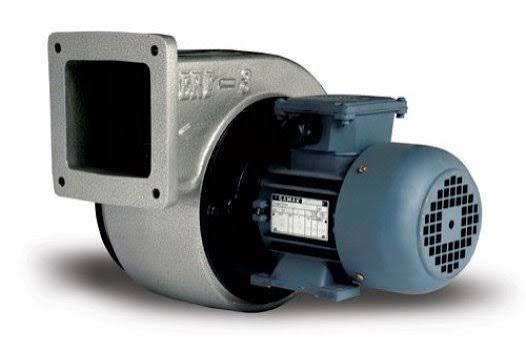
ERF Fan stands for Energy Recovery Fan. This type of fan operates as part of an energy recovery system and its primary function is to transfer and recover thermal energy and, in some cases, moisture between exhaust air and incoming fresh air.
In simple terms, an ERF Fan allows the energy contained in exhaust air—energy that would normally be wasted—to be reused to condition incoming fresh air, without mixing the two air streams directly.
How Does an ERF Fan Work?
An ERF Fan typically operates alongside a heat exchanger, such as a heat wheel or a plate heat exchanger. The process works as follows:
Warm or cool contaminated air is exhausted from the indoor space.
Fresh outdoor air is drawn into the system.
The ERF Fan transfers thermal energy—and in some models, moisture—from the exhaust air to the incoming air.
The conditioned fresh air enters the indoor space at a more balanced temperature.
This process significantly reduces the heating or cooling load on the HVAC system.
Benefits of Using an ERF Fan
Using an ERF Fan offers several key advantages, including:
Reduced energy consumption: Energy recovery lowers the need for additional heating or cooling.
Lower operational costs: Reduced energy usage leads to lower electricity and fuel expenses.
Improved indoor air quality (IAQ): Fresh air can be supplied continuously without energy loss.
Better humidity control: Many ERF Fans are capable of recovering and balancing moisture.
Environmentally friendly: Lower energy consumption helps reduce greenhouse gas emissions.
Applications of ERF Fans
ERF Fans are widely used in a variety of buildings and facilities, including:
Office and commercial buildings
Hospitals and healthcare facilities
Data centers
Industrial plants and factories
Hotels and hospitality facilities
Educational institutions and universities